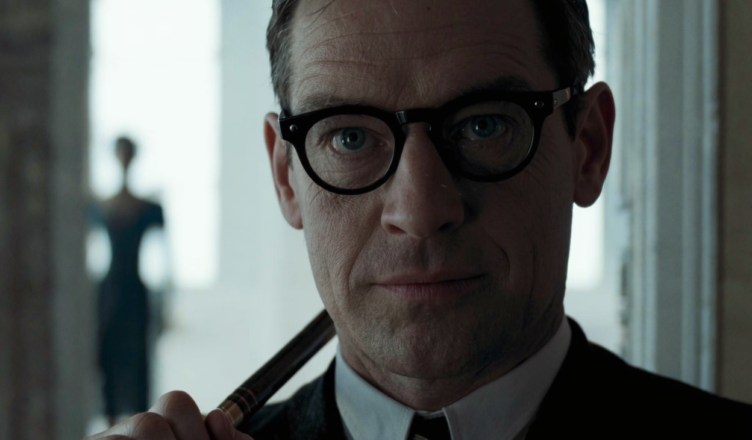
For six months, Alexander Whitmore lived in darkness his doctors couldn’t explain. The truth was closer than he ever imagined — and it took a child’s courage to bring it into the light
It started as a mist.
That was the only way Alexander Whitmore could ever describe it afterward — not blindness, not at first, but a fog that crept over the edges of everything he looked at. The letters on his contracts blurred first. Then the faces of his staff lost their definition, one by one, until even the light fixtures in his own mansion became nothing more than white smears of pain.
By the time he could no longer recognize his own hand in front of his face, Alexander Whitmore — forty-seven years old, owner of one of the largest real estate empires in the state, a man who had built hotels and office towers and an entire fortune out of sheer will — had become something he never imagined: helpless.
The doctors offered theories. A degenerative disease. Inflammation of the optic nerve. An autoimmune disorder no one could quite name. They agreed on exactly one thing: the damage looked irreversible.
None of them thought to ask who was cooking his soup.
The Perfect Wife
To the outside world, Vanessa Whitmore was everything a tabloid could want — elegant, composed, endlessly devoted. When her husband’s sight began to fail, she abandoned her social calendar entirely, canceling galas and luncheons to remain, as she told every reporter who asked, “by his side, always.”
The press adored her for it. Profiles praised her sacrifice. Nobody printed what was happening behind the mansion’s carefully guarded gates.
Because behind those gates, Vanessa wasn’t simply caring for her husband. She was rebuilding his entire world around her control of it.
The longtime driver was gone within weeks. The secretary followed. Even the kitchen staff was quietly replaced, until only one employee from Alexander’s old life remained: Rosa Martinez, a kitchen assistant who had worked in the house for nearly a decade.
Rosa could still cook for Mr. Whitmore. She simply could no longer serve him.
“Mr. Whitmore needs a special diet,” Vanessa told her, again and again, with a smile that never quite reached her eyes. “No one is to add anything without my authorization.”
What Rosa Saw in the Pantry
It happened on an ordinary winter afternoon. Rosa walked into the pantry looking for flour and found Vanessa with her back turned, a small brown jar in her hand — crushing pills against a napkin with the practiced efficiency of someone who had done it many times before.
Rosa watched her tip the powder into a bowl of soup meant for Alexander.
For a long moment, neither woman moved. Then Vanessa turned.
“What are you doing here?”
“I was looking for flour.”
Vanessa’s hand closed protectively over the jar. “Those are Mr. Whitmore’s medications.”
“In the soup?”
“He has difficulty swallowing them.”
“I could dissolve them in water instead.”
Vanessa’s expression hardened into something Rosa had never seen from her before. “I don’t need advice on how to take care of my husband. And I don’t want you coming back in here without warning.”
Rosa returned to the kitchen, but the image wouldn’t leave her. That night, watching from a distance as Vanessa spooned soup into her husband’s mouth, she saw Alexander begin rubbing his eyes.
“The light hurts me,” he murmured.
“Rest,” Vanessa said softly. “I’ll take care of everything.”
A Pattern Too Consistent to Ignore
In the days that followed, Rosa started paying closer attention — and what she noticed chilled her. The brown bottle never left Vanessa’s coat pocket. It appeared in soups. In juices. In tea. And whenever Alexander refused to eat, Vanessa grew visibly anxious, insisting, “The medication will only work if you follow the diet.”
Rosa wanted to say something. But fear kept her silent — the particular, suffocating fear of a single mother with two children depending on her paycheck. Her daughter Elena was ten. Her son Mateo, six, had been born with a serious heart condition requiring surgery Rosa could never afford on her own.
Their one hope was a new fund at Whitmore Children’s Hospital, established for uninsured children — a fund Alexander himself had promised to finance with a substantial part of his fortune. Rosa had already submitted Mateo’s application.
But since Alexander’s sight began failing, the entire project had quietly stalled. Vanessa had made certain of that, declaring that her husband was no longer fit to make financial decisions.
The Discovery That Changed Everything
Weeks later, digging through the pantry trash, Rosa found several empty medication packets. She kept one and searched the substance online that night, alone in her apartment after the children were asleep.
The listed side effects made her legs give out beneath her: blurred vision. Eye inflammation. Neurological damage. Temporary — or, in high doses, permanent — loss of sight.
Her daughter Elena found her crying in the kitchen.
“What’s wrong, Mom?”
“Nothing.”
“You’re trembling.”
Rosa glanced toward the bedroom where Mateo slept, connected to his small heart monitor, and said only, “I saw something at work. Something bad.”
A Threat Disguised as Concern
Rosa wasn’t the only one who’d noticed something missing. When one of the medication envelopes disappeared from Vanessa’s private stash, she summoned Rosa to her office — and the warmth in her voice vanished entirely.
“Listen carefully,” Vanessa said. “There are people who should learn not to look where they shouldn’t.”
“I don’t understand.”
“Your son is sick, isn’t he? The hospital’s funding hasn’t been approved yet. It would be a shame if his application were to disappear.”
Rosa understood immediately: if she spoke, Mateo would lose his only chance at surgery. She went home that night devastated, and once again, Elena heard her crying through the bedroom door.
But this time, the ten-year-old didn’t just listen. She acted.
The Girl Who Walked Into a Billionaire’s Garden
The next morning, while her mother believed she was safely at school, Elena slipped the hidden envelope — along with the brown jar Rosa had rescued from the trash — into her backpack. She had no plan to go to the police. She had a simpler, far more dangerous idea: she was going to tell Alexander Whitmore herself.
The Whitmore estate was ringed with security cameras and a fence tall enough to keep out grown men, let alone children. But Elena had heard her mother mention, almost in passing, that Alexander walked the garden every afternoon, guided only by his cane.
She waited near the service entrance until a delivery truck rolled out, then slipped through the gap in the gate and moved through the trees until she found him — sitting alone on a stone bench beside the pond, dark glasses shielding his ruined eyes, Vanessa a short distance away, absorbed in a phone call.
“Mr. Whitmore,” Elena said quietly.
Alexander lifted his head. “Who’s there?”
Vanessa spun around instantly. “How did you get in? Leave here immediately.”
But Alexander raised a hand. “Wait.”
What the Girl Was Holding
Elena stepped closer, mud on her shoes, the brown bottle in one hand and a small plastic lid dusted with residue in the other.
“My mom works in your kitchen,” she said. “She saw her crushing these pills in your food.”
Vanessa moved toward her fast. “Don’t listen to this girl. Her mother has problems.”
Elena held her ground, hiding the jar behind her back. “We found the containers in the trash. We’re looking for the name. It can cause someone to lose their sight.”
Alexander went rigid on the bench. For months he had placed every meal, every drink, every dose of medicine entirely in his wife’s hands.
“Vanessa,” he said slowly, “what’s inside that jar?”
“They’re your medications. Dr. Meyers prescribed them.”
“Meyers stopped treating me four months ago.”
Silence.
The Light Returns
What Vanessa didn’t know — what no one but Rosa knew — was that Alexander hadn’t touched his soup that morning. Rosa had pretended to spill it, a small, quiet act of defiance repeated more than once in recent days without his notice.
For the first time in months, the fog had begun, almost imperceptibly, to lift.
Alexander removed his dark glasses. The light still burned, but shapes were returning — and the shape resolving in front of him now was his wife, coming back into focus like a memory that had been deliberately withheld from him.
“For how long?” he asked.
Vanessa’s composure finally broke. “I was helping you.”
“Helping me?”
“You were going to leave me,” she said, and the words landed colder than the winter wind moving through the garden. “I found the documents. The transfer of the property.”
The Motive Behind the Poison
It was, at last, the truth. Months earlier, Alexander had quietly arranged to donate the family estate and a significant portion of his fortune to Whitmore Children’s Hospital, transforming the property into a recovery center for critically ill children and their families. Vanessa would keep a home, a comfortable pension — but never control of the empire itself.
“I wasn’t going to leave you with nothing,” Alexander said. “I was going to donate the farm to the hospital.”
“You were going to give it all away.”
“Not everything.”
“This house should be mine! I spent eleven years with you!”
“And you thought that gave you the right to destroy my health.”
Vanessa didn’t deny it — not entirely. “It wasn’t permanent. I just needed you to depend on me.”
Alexander’s vision, though still blurred, was clear enough now to see her fully for the first time in half a year.
“Did you take away my sight to control my decisions?”
“I could have taken care of you.”
“You needed me to be defenseless.”
A Child’s Reason
In the silence that followed, Elena spoke again, quieter now. “My mom wanted to tell you. She was scared. So I found the bottle in the trash myself.”
Alexander turned toward her. “Did you come in here alone to warn me?”
She nodded. “My little brother is sick. His fund should help children like him.”
It was in that moment, staff would later say, that Alexander understood the full scope of what had been taken from him. Vanessa hadn’t only tried to steal his sight. She had tried to steal the one chance at survival for children — like Mateo — who would never even know his name.
He rose slowly from the bench, his legs unsteady but his voice regaining a strength no one in that garden had heard from him in months.
“Please,” Vanessa whispered. “You need me.”
Alexander looked at her directly — really looked, for what felt like the first time in years.
“No. You needed me not to be able to see you.”
Elena stepped forward and placed his dark glasses gently in his hand. He never put them on again.
For the first time in six months, Alexander Whitmore looked out at the world without darkness — and the first thing he saw clearly was the face of the woman who had taken it from him.
The Story Isn’t Over
Sources close to the household say Vanessa was not ready to accept defeat quietly, and what followed in the days after that confrontation in the garden has only begun to come to light. Whether the hospital fund will now move forward — and what becomes of the woman who called herself an exemplary wife — remains, for now, an open question.
What is certain is this: it took a frightened kitchen assistant, a ten-year-old girl with mud on her shoes, and a six-year-old boy waiting for a surgery he couldn’t afford, to do what a small army of doctors, lawyers, and specialists could not — bring Alexander Whitmore back into the light.
This is a work of fiction. Names, characters, and events described are products of imagination.