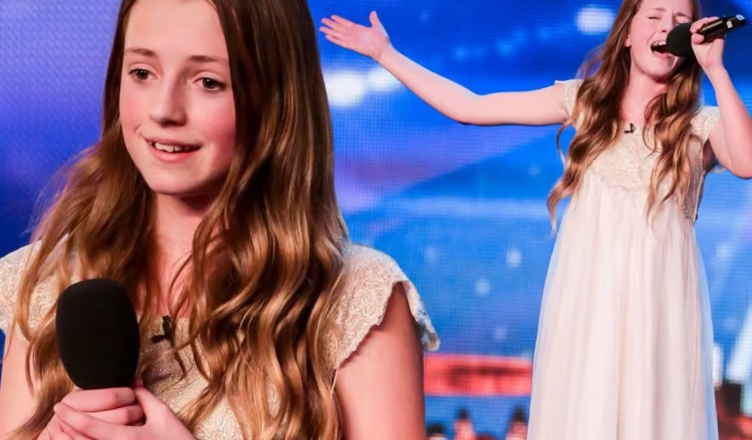
Some performances are impressive because of the technical skill behind them, while others become unforgettable because of the emotion they create in the room. Maia Gough’s performance belongs firmly in the second category. At only 12 years old, she stepped onto the stage with the enormous challenge of performing material associated with one of the greatest voices in music history: Whitney Houston. What followed was a performance powerful enough to earn a well-deserved standing ovation.
Taking on a Whitney Houston song is never a simple task. Houston’s voice was known for its extraordinary range, control, power, and emotional intensity, making her songs some of the most demanding pieces in popular music. For a young singer, attempting one of these performances can be incredibly intimidating. Yet Maia does not appear overwhelmed by the challenge. Instead, she approaches the song with confidence and a remarkable sense of purpose.
From the beginning, there is a clear feeling that this is more than a young singer simply trying to impress the judges. Maia’s admiration for Whitney Houston shines through in the way she approaches the music. There is a sense of respect for the original artist, but there is also enough individuality to make the performance feel like her own. That combination is important, because the best tribute performances do not merely copy a legend—they reveal why that legend mattered while allowing a new artist to shine.
What makes the performance particularly striking is the contrast between Maia’s age and the maturity of her vocal delivery. At 12 years old, she possesses a confidence and stage presence that immediately command attention. As the song develops, the performance grows in intensity, giving her opportunities to demonstrate both control and power. The audience’s reaction makes it clear that they recognize something special happening in front of them.
Whitney Houston’s influence on generations of singers is impossible to ignore, and performances like this demonstrate how that influence continues to live on. Young artists discover Houston’s music, study her technique, admire her emotional delivery, and then bring those lessons into their own performances. Maia’s rendition becomes part of that continuing musical legacy, connecting a legendary voice from the past with a talented young performer of a new generation.
There is something especially moving about watching a young singer take on such an ambitious challenge. At that age, many performers are still developing their confidence and discovering their own voices. Maia, however, steps into the spotlight with the kind of determination that suggests she understands the significance of the moment. She is not simply singing notes; she is telling the audience that she belongs on that stage.
The standing ovation at the end is perhaps the clearest indication of how strongly the performance affected the room. Audiences do not stand simply because a singer reaches a difficult note. A standing ovation usually comes when technical ability, personality, confidence, and emotion combine to create something memorable. Maia manages to create that kind of moment, leaving the audience with an experience that goes beyond the song itself.
Another fascinating element is the pressure that comes with performing a song made famous by an icon. When audiences know the original version so well, every difference becomes noticeable. Instead of trying to compete with Whitney Houston, Maia brings her own youthful energy and interpretation to the material. That approach allows listeners to appreciate both the legendary original and the promise of a young singer discovering her own artistic identity.

Perhaps the most exciting part of the performance is thinking about what could come next. A 12-year-old singer who can already command a stage in this way has enormous room to grow. Her voice, confidence, musical understanding, and performance experience can continue developing over the years. Moments like this can become important milestones—the performances people look back on later and say, “That was when we first realized how special she could become.”
Ultimately, Maia Gough’s performance is a beautiful example of how music can connect generations. Whitney Houston’s extraordinary legacy continues to inspire young singers, and Maia demonstrates that inspiration with a performance that captures the attention of both the audience and the judges. At just 12 years old, she took on one of music’s most demanding vocal challenges, delivered it with remarkable confidence, and earned a standing ovation that she will not soon forget. It is the kind of performance that makes you stop, listen, and wonder just how far this young talent might go.