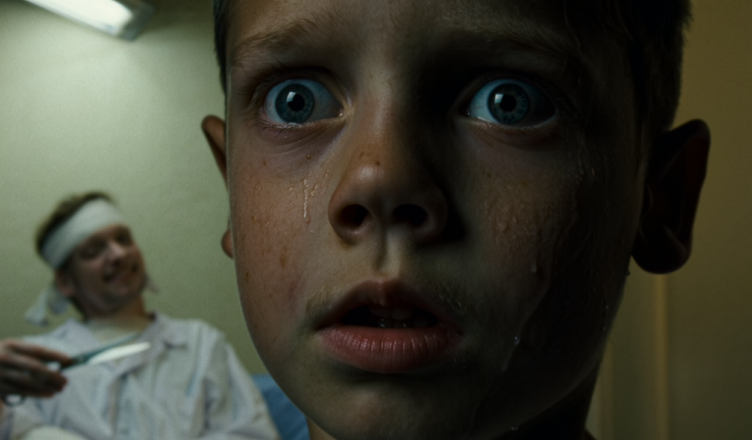
It started as a whisper. It ended with a scream that no one in that hospital would ever forget.
A Warning No One Believed
Caleb was eight years old, small for his age, with the kind of quiet, watchful eyes that made adults uneasy without knowing why. For three days, he had been telling anyone who would listen that something was wrong with his arm — not the break itself, but what was underneath the cast.
“It’s moving again,” he whispered to his stepmother, Ruth, grabbing her sleeve with trembling hands. “Please.”
Ruth felt the words go through her like static down her spine. She had heard this before — twice that week already — and both times she’d been told the same thing: it’s just healing. It’s normal. Casts itch, casts feel strange, kids imagine things.
But this time was different. This time, Caleb wasn’t just uncomfortable. He was terrified.
Despite objections from Marissa — Caleb’s stepmother on his father’s side, technically, though the family dynamics were complicated enough that nobody used titles anymore — Ruth called for an ambulance.
The Ride That Changed Everything
The drive to the hospital should have been routine. It wasn’t.
Somewhere between the house and the emergency entrance, Caleb began screaming — not the frightened whimper of a child in pain, but a raw, desperate wail that made the paramedic in the back of the ambulance radio ahead immediately: have the attending physician meet us at the door.
Minutes later, Dr. Miguel Torres, a trauma physician with fifteen years of experience and very little patience for delay, looked the boy over once. He didn’t need a second look.
“I’m cutting this cast right now,” he said.
“No!” Marissa’s voice cracked across the room. “Your specialist said everything was fine.”
Torres didn’t even glance at her.
Silence in the Room
What happened next unfolded in near total silence.
The overhead lights hummed. Grant — Caleb’s father — gripped his son’s hand so tightly his knuckles went white. Ruth stood frozen, saying nothing. Marissa stayed rooted by the door, unmoving, as if some part of her already knew what was coming.
The rhythmic buzz of the cast saw filled the room and then stopped.
The last layer of plaster peeled back, slow and deliberate.
And then something black fell onto the metal exam table.
The doctor stepped back instinctively. A nurse let out a short, sharp gasp. Grant felt his own heart seem to stop mid-beat.
A scorpion. Alive.
Then a second one skittered out from the shadow of the cracked plaster.
Then a third.
All three began moving across the surface of the exam table in the open air, no longer confined, no longer hidden — finally, horribly visible.
“I Told Them Something Was Inside”
For a long moment, nobody in that room spoke. Nobody moved. Caleb, tears streaming down his face, finally broke the silence.
“I told them there was something inside,” he said, his voice cracking with a mixture of vindication and pure terror. “I told them and nobody listened.”
Still, no one spoke.
Because at that exact moment, everyone in the room arrived at the same devastating realization simultaneously.
Live scorpions do not end up inside a child’s cast by accident.
Someone had put them there.
And in the days since the cast had been applied, exactly one person had been alone with Caleb long enough to make that possible.
The Turn
Slowly, deliberately, Grant turned his head toward his wife.
For the first time since anyone in that room had known her, Marissa’s face lost every trace of color.
She said nothing. She didn’t need to. The silence itself had become an answer — the kind of answer that turns a hospital room into a crime scene without a single word being spoken.
What happens next — what Marissa knew, what she had access to, and why a child’s cries were dismissed for three straight days before anyone finally listened — is a story still unraveling. But one thing in that emergency room was no longer in question:
Caleb had been telling the truth the entire time.
This story is a work of fiction.